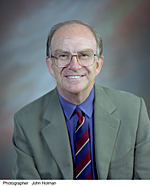
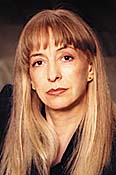
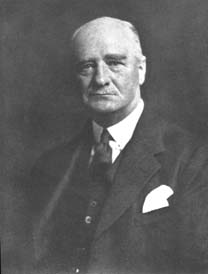
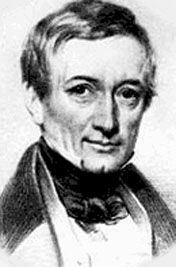
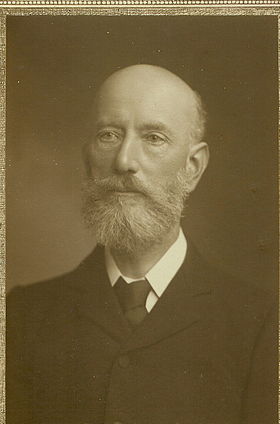
Like his father who was a doctor, William Odling (1829-1921) studied medicine as a young man. However, rather than going into practice, he forged a career researching, lecturing and writing about chemistry. His first book, Practical Chemistry for Medical Students, was published in 1854. Odling contributed to the development of the Periodic Table. In 1864, he produced a table with 57 elements at a time when fellow British chemist John Newlands had identified only 24.
John Hall Gladstone (1827-1902) was a pioneer in the fields of optics and spectography. He became a chemical lecturer at St Thomas's hospital in 1850 and was elected a fellow of the Royal Society in 1853, at the unusually young age of twenty-six. Gladstone was concerned that British chemists were falling behind their counterparts in other nations. He became an education reformer and advocated for the teaching of science in elementary schools. In 1879, Gladstone wrote a biography of his predecessor Michael Faraday expanding on the books about him written by others by adding his own personal recollections.
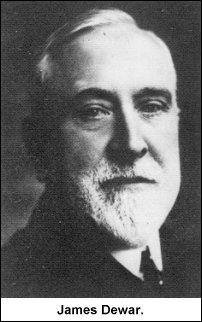
It could be argued that Sir James Dewar (1842-1923) had an explosive tenure as Fullerian Professor of Chemistry. Despite his achievements, he is remembered as one the most quarrelsome men in the history of science. At the age of 10, he fell through the ice on a frozen pond and was crippled for life. In his quest to liquefy hydrogen, which he was the first to do, two of Dewar’s lab assistants lost their eyes in explosions. Dewar realised that a special container needed to be developed in order to safely store gases at extremely low temperatures. This led to the invention of the Dewar or vacuum flask, a glass vessel, with inner and outer walls enclosing a vacuum for which he is best remembered.
William Henry Bragg (1862-1942)with his son William Lawrence Bragg (1890-1971), won the Nobel Prize for Physics in 1915 for their services in the analysis of crystal structure by means of X-rays. To the time of writing, they remain the only father and son Nobel laureates. William Henry Bragg designed a spectrometer that enabled them to determine the arrangement of atoms in common salt, pyrite, fluorite and calcite. Both father and son were, in turns, directors of the Royal Institution.
The fourth Fullerian Professor to win a Nobel Prize, and the second for medicine, was Sir Henry Hallett Dale (1875-1968). In 1936, Dale shared the honour with his life-long friend, German pharmacologist Otto Loewi. The award was presented to them on account of the discoveries relating to chemical transmission of nerve impulses. In his work as a medical doctor and researcher, Dale studied the effects of poisoning and anaphylactic shock. He helped standardise anti-toxins and drugs, and provided the first international standard for insulin.
Sir Eric Keightley Rideal (1890-1974) received many honours and awards for furthering our scientific knowledge. His research spanned seven decades and a range of fields including electrochemistry, catalysis, and surface chemistry. He was knighted in 1951 and elected a Fellow of King's College London in 1963. In a characteristically humble manner he told a colleague that 47 of the people who had worked with him had become professors. Rideal felt that this was an important contribution, even if all the science he had published was proven to be wrong.
A true Renaissance man, Edward Neville da Costa Andrade (1887-1971) was a physicist, writer, poet and broadcaster. Born in London, Andrade was a Sephardi Jew of Portuguese ancestry. He and partner Edward Rutherford, were the first to determine the wavelength of gamma rays emitted from radium His tenure as a Fullerian Professor was a short one. Upon his appointment to the RI Andrade quickly fell out with the Managers which resulted in the members of the RI passing a vote of no confidence in him in mid-1952 forcing him to resign. Andrade had met with resistance when he sought to reform the organisation.
William Lawrence Bragg (1890-1971) was born in Adelaide, South Australia and died in Ipswich, Suffolk. He is the discoverer of the Bragg law of X-ray diffraction, which is essential in determining crystal structure. William Lawrence Bragg was 25 when he and his father William Henry Bragg shared the Nobel Prize for their work in the analysis of crystal structure by means of x-ray. He remains, to the time of writing, the youngest Nobel Prize winner for Physics.
During the Second World War George, Baron Porter of Luddenham (1920-2002) was in the Royal Navy and served on antisubmarine duty. His experience with signal lamps, inspired him to develop the technique of ‘flash photolysis’ to gather information on short-lived molecular species which provided the first evidence of free radicals. The Nobel Prize in Chemistry 1967 was divided, one half awarded to Manfred Eigen, the other half jointly to Ronald George Wreyford Norrish and George Porter for their studies of extremely fast chemical reactions, effected by disturbing the equilibrium by means of very short pulses of energy. Porter was the seventh Fullerian Professor to be a Nobel laureate, and the first for Chemistry.
The son of a coal miner, Sir John Meurig Thomas (1932 - ) was born near Llanelli, South Wales. His research centres around heterogeneous catalysts, which substances that speed up chemical reactions, but get used up themselves in the process. He is a pioneer in ‘green catalysts’ which are even more efficient and create less pollution. In 1995, a new mineral was named Meurignite in recognition of his work in geochemistry. He was presented with the Medal of the Honourable Society of Cymmrodiorion London, for services to Welsh culture an British public life in 2003. It was the first time the award was given to a scientist.
Peter Day (1938 - )is an inorganic chemist. He pioneered work in mixed-valence compounds which led to the Robin-Day classification system. The Royal Society of Chemistry named an award to honour his scientific contributions. Presented annually since 2008, the Peter Day Award is given for outstanding contributions to the field of Materials Chemistry. He promotes the notion that the general public benefit greatly from understanding of how science and technology impact their lives.
Born in New Zealand, Quentin A. Pankhurst ( - ) moved to the UK in 1983 to study solid state physics at the University of Liverpool. He has been a Professor of Physics, since 1994, and is the Director of the Healthcare Biomagnetics Laboratory at University College London. Pankhurst is the co-founder of Endomagnetics Ltd, a company which ran clinical trials of the SentiMag, an intra-operative device used during breast cancer surgery.
The son of a Swiss clergyman, Peter Mark Roget (1779-1869) studied medicine at Edinburgh University at the age of fourteen. Roget was a medical doctor, prolific writer and philologist. He is best known as the author of the Thesaurus of English Words and Phrases, first published in 1852 and has never been out of print. In 1814 Roget invented a slide-rule, called a log-log (logarithm to logarithm), that could be used to calculate square roots and exponents. In the eleventh codicil of Fuller’s will, he stipulates that ‘Dr Roget is to give six lectures upon mechanics and six upon comparative anatomy annually’.
Robert Edmond Grant (1793-1874) born in Edinburgh, Scotland he was one of fourteen children. Grant graduated medical school in Edinburgh in 1814 and set up practice. He later become a specialist in marine biology and invertebrate zoology. Grant’s research on sponges determined that they were in fact animals and not plants as previously thought. He coined the term for their phylum, porifera, which means pore bearing. Grant’s collection of specimens, material for dissection, diagrams and lecture notes formed the basis of the Grant Museum of Zoology and Comparative Anatomy and University College London in 1828. It has been open to the public since 1996.
Due to a hearing impairment, Thomas Rymer Jones (1810-1880) found it difficult to practice medicine after training as a doctor. He became a zoologist, academic and writer. Jones wrote and illustrated several highly regarded textbooks on the classification of species including: The Aquarian Naturalist: a manual for the seaside (1858); The Animal Creation: A popular introduction to Zoology (1865); and Mammalia: a popular introduction to Natural History (1873).
William Benjamin Carpenter (1813-1885) formulated a theory of ocean circulation which supported the idea that the ocean circulation was directly related the temperature of water at various latitudes. With Charles Wyville Thomson, he organised the three and a half year voyage of the HMS Challenger. During the expedition, they gathered abundant data on the temperature, salinity and specific gravity of seawater. Hundreds of new animal species were discovered. However, Carpenter’s theory of ocean circulation was not proven by the Challenger data.
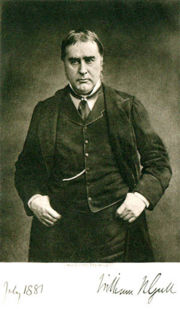
William Withey Gull (1816-1890) was an outstanding doctor and the court physician of the Prince of Wales and Queen Victoria. He coined the term anorexia nervosa and treated the condition as a psychological disorder rather than physical ailment. His research advanced the understanding of myxoedema (atrophy of the thyroid gland), and paraplegia. Gull has been implicated in the Whitechapel Murders by twentieth century Ripperologists. They offer his closeness to the Royal Family and surgical skills as proof but there is no hard evidence linking him to the crimes. Gull, who was 71 years old and in failing health in 1888 when the events took place, has been somewhat vindicated. His reputation has unfortunately been tarnished by the accusation.
Born at St Andrews, Scotland, Thomas Wharton Jones (1808-1891) studied medicine in Edinburgh. He became a physiologist and ophthalmologist. Among his published works are: Failure of Sight from Railway and Other Injuries of the Spine and Head (1855); and Defects of Sight: their nature, causes, prevention, and general management (1877). Jones never married and was considered an eccentric who did not socialise much outside of work. He became destitute in later life but, thankfully, through the intervention of former colleagues was given a pension and lived out his life in relative comfort on the Isle of Wight.
Thomas Henry Huxley (1825-1895) was a self-educated man, who became a distinguished biologist and anthropologist. He earned the nickname ‘Darwin’s Bulldog’ because he never passed up an opportunity to promote the cause of evolution. In 1850, he travelled to Australia and New Guinea on the HMS Rattlesnake and subsequently became known for his studies on marine invertebrates. Huxley’s theory that birds evolved from small carnivorous dinosaurs is now widely accepted. His grandsons Andrew Fielding Huxley and Julian Sorell Huxley were also Fullerian Professors.
An early paleontologist, Richard Owen (1804-1892) coined the term ‘Dinosauria’, meaning terrible lizard, to describe newly discovered species. At the age of sixteen, he apprenticed to a surgeon whose practice included inmates of the local gaol. He studied comparative anatomy at the Edinburgh University. In 1827 he began a 57 year career in museum curation. He built his reputation by expanding on the works of other paleontologist but not giving them the credit due. Owen’s career was riddled with professional conflict. ‘Owen seemed to thrive on feuds and antagonism, wounding his rivals with almost the same clinical satisfaction with which he tackled his dissections’.[D. Cadbury, The Dinosaur Hunters, p. 278.]
John Marshall (1818 - 1891) was born in Ely, Cambridgeshire where his father was a solicitor. Marshall attended University College in 1839 and maintained an association with that institution for the rest of his life. He held many prestigious teaching positions including sixteen years as Professor of Surgery at University College, fifteen years as Professor of Anatomy at the Royal Academy of Arts. It is noted that Marshall had a particularly happy marriage to Ellen Rogers and extended generous hospitality to his colleagues and students in his home.
Following in his father’s footsteps, Sir Michael Foster (1836-1907) trained as a medical doctor. He achieved his MA at University College in 1859. He was appointed Professor of Physiology at Cambridge in 1883. Foster was an inspiring educator who believed that students of biology and physiology would learn best through conducting their own experiments. He tailored his lectures to fit the practical lessons of the laboratory. He was elected MP for London University in 1900 and served until 1906.
When William Rutherford (1839-1899) graduated from the University of Edinburgh in 1863, he did so with honours and received a gold medal for his thesis. He was appointed Chair of Physiology at King's College, London in 1869 and was Professor of Physiology at Edinburgh University, from 1874 to 1899. Rutherford’s experiments on unanethetized dogs were condemned by contemporary anti-vivisectionists. His work had strained him to the point that his mental balance and soundness of judgement were affected. There is some conjecture that he may have taken his own life.
Alfred Henry Garrod (1846-1879) was a vertebrate zoologist and ornithologist. His detailed observations revolutionised the taxonomy and classification of bird species. After his death, Garrod’s colleagues compiled and published, in one volume, his collected papers from taken from various scientific journals. Among the most significant of Garrod's papers are his works on the carotid arteries; on certain muscles of the leg; on the anatomy of Pigeons, of Parrots, and of Passerine Birds; and on the trachea in Galilinae.
In 1903, Sir Edward Albert Sharpey-Schafer (1850-1935) invented a form of artificial respiration which was named after him. It was used to save the lives of drowning, electric shock and asphyxiation victims. The Sharpey method was used by ambulance attendants until it was replaced by mouth-to-mouth resuscitation. He suggested that a single chemical compound was missing from the pancreas of diabetics and called it ‘insulin’. Sharpey-Schafer also coined the term ‘endocrine’ for the secretions of the ductless glands.
His love of music inspired John Gray McKendrick (1841-1926) to study sound production and hearing. By all accounts, he was an excellent teacher and lecturer. McKendrick’s Sound, Hearing and Speech Christmas Lectures of 1896 were immensely popular particularly with children, who formed a large part of the audience at the Royal Institution that year. He was noted for his genial, kindly nature and for being without selfish ambition.
The youngest of eight children, Arthur Gamgee (1841-1909) was born in Florence, Italy to a Scottish veterinarian and pathologist. He was considered an excellent teacher and an accomplished linguist, being fluent in Italian, German and French. Gamgee studied medicine in London and Edinburgh. He was appointed Professor of Physiology a the Royal Manchester School of Medicine and was a physician a the Manchester Hospital for Consumption. Gamgee died of pneumonia while visiting Paris.
Born in Kingston, Ontario, Canada, George John Romanes (1848-1894) was the son of a Presbyterian minister. The family returned to England shortly after his birth when Romanes’ father received a large inheritance. This windfall meant that Romanes could pursue research without financial worries. He greatly admired and became a close friend of the much older Charles Darwin. Romanes pioneered the field of comparative psychology, which is the study of the behaviour and mental processes of animals, using the anecdotal method.
Sir Victor Alexander Haden Horsley (1857-1916) was a physiologist and neurosurgeon. He developed many surgical techniques and in 1887 was the first to remove a spinal tumour by means of a laminectomy. Horsley was a pioneer in brain surgery and by 1890 had performed 44 successful operations. He died at Amarah, Iraq, on 16 July 1916, of heatstroke, while serving as field surgeon for the British Army during World War I.
As well as being a zoologist, Charles Stewart (1840-1907) worked in the fields of comparative anatomy and pathology. Stewart was appointed Conservator of the Hunterian Museum of the Royal Society of Surgeons in 1884. He was tasked with updating the museum’s catalogue and utilised the information gleaned from the process in his lectures when he was Hunterian Professor of Comparative Anatomy and Physiology (1886-1902).
Born in Paris, Augustus Désiré Waller (1856-1922) spent his childhood in Europe and was fluent in French and German. Stewart had a laboratory in his home at St John’s Wood, London where he would frequently conduct experiments on his pet bulldogs, children, and visitors. In May of 1887, Waller used a capillary electrometer to record the first human electrocardiogram. His text book An Introduction to Human Physiology, published in 1891, was considered standard reading for medical students.
Sir Edwin Ray Lankester (1847-1929) wrote columns for the Daily News, which he compiled and published in a book called Science from an Easy Chair (1910). Lankester was an invertebrate zoologist and evolutionary biologist. He was the first to demonstrate how the horseshoe crab or Limulus is related to spiders, the Arachnida. He publicly exposed a number of spiritualists and mediums as frauds. Lankester became a close friend of Karl Marx, during the latter’s declining years, and was one of a handful of people at Marx’s funeral.
Scottish bacteriologist, Allen Macfadyen (1860-1907) gave a series of lectures at the Royal Institution on ‘cellular physiology’ in the spring of 1901 which garnered much attention. Macfadyen is noted for his work on the behaviour of bacteria in the human digestive tract and the ‘endotoxins’ of pathogenic micro-organisms, for example typhoid, cholera, pneumonia and the plague. After leaving the RI, Macfadyen accidentally, and fatally, infected himself with typhoid.
Louis Compton Miall (1843-1921)was a paleontologist, biologist and academic. He followed his four brothers as a boarder at Silcoates School, Wakefield, Yorkshire. At the age of 15, Miall began teaching younger students at a school his parents started. His early work focused on geology and paleontology. In 1867, he enrolled in the Leeds School of Medicine. His later research centred on entomology and specifically on the observation of living insects. Miall was a prolific author, writing on a wide range of topics from coal to the harlequin fly.
William Stirling (1851-1932), known as Billy, he was born in Grangemouth, near Falkirk, Scotland. After studying science and medicine in Edinburgh, he worked in Leipzig, Berlin and Paris before returning to Edinburgh. Stirling was a founder of the physiology department at Victoria University of Manchester. He was also the Dean of the Medical School there from 1902 to 1913. Stirling believed strongly in educating the public in medical matters and used lantern slides in his popular lectures.
Biologist and neuropathologist Sir Frederick Walker Mott (1853-1896), was instrumental in the founding of the Maudsley Hospital for psychiatric treatment in London. During the First World War, the Maudsley became a centre for clearing, treatment and research into cases of shell shock. Mott personally took on the most difficult cases and lectured on the diagnosis and treatment of war related neuroses. Mott pioneered research into the link between syphilis, mental illness and paralysis. He be came an advocate for the prevention and early detection of syphilis.
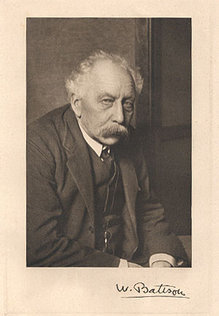
In 1906, William Bateson (1861-1926) coined the term ‘genetics’ to describe the study of heredity. He became the first director of the John Innes Horticultural Institution on 1 January 1910, a position he held until his death in 1926. With E. R. (Rebecca) Saunders, Bateson founded the Genetical Society. He translated Austrian monk Gregor Mendel’s groundbreaking paper ‘Experiments with Plants’ into English. Through experiments Bateson, with Reginald Punnett, showed that Mendel’s principles could be applied to animals. He discovered that certain features were consistently inherited together a phenomenon which is now termed ‘linkage’.
Charles Scott Sherrington (1857-1952) worked in the fields of pathology, histology, bacteriology and neuropathology. In 1906, Sherrington published a series off his lectures in The Integrative Action of the Nervous System. In this seminal work, he explained that synapses (a word he coined) transmit electrical impulses between neurons. In 1932, he and Edgar Adrian, 1st Baron Adrian, won the Nobel Prize for Physiology or Medicine, ‘for their discoveries regarding the functions of neurons’. He was the third Fullerian Professor to receive a Nobel Prize, the first to do so for medicine.
Sir Arthur Keith (1866-1955) was a Scottish anthropologist. He won the first Struthers prize (1893) for his demonstration of the leg ligaments in humans and apes. Along with Fullerian Professors Lankester and Elliot Smith, Keith’s name is associated with the Piltdown Man hoax. Whether Keith was complicit or merely an unsuspecting dupe remains unproven. He was a proponent of ‘scientific racism’ and believed that racial intermarriage produced ‘inferior progeny’ and on that basis supported racial segregation.
Born to a Quaker family in County Down, Ireland, Sir Joseph Barcroft (1872-1947) is best known for his studies on haemoglobin and the oxygenation of blood. He frequently put his own health and safety at risk when experimenting with poisonous gases and oxygen intake. Barcroft was a pacifist however he contributed as the chief Physiologist at the Gas Warfare Centre at Porton Down, near Salisbury, during both world wars.
Sir Julian Sorell Huxley (1887-1975) was an evolutionary biologist. An avid bird-watcher, Huxley wrote extensively about his observations of their behaviour. In 1946, be became the first Director-General of the United Nations Educational, Scientific and Cultural Organisation (UNESCO). On a trip to East Africa in 1960, Huxley was alarmed by the destruction of habitat and hunting of wildlife. The public support he garnered on these issues led to the founding of the World Wildlife Fund. He was the brother of author Aldous Huxley; half-brother of Arthur Fielding Huxley and grandson of biologist Thomas Henry Huxley.
In 1929, John Burdon Sanderson Haldane (1892-1964) postulated his ‘primordial soup’ theory in a paper aptly named The Origin of Life. He was the first to conceptualise in vitro fertilisation, organismal cloning and hydrogen economy. He developed Haldane’s Rule for hybrid which states,‘When in the F1 offspring of two different animal races one sex is absent, rare or sterile, that sex is the heterozygous [heterogametic] sex. Haldane was known for participating in extreme experiments, for example, he once drank a bottle of hydrochloric acid and cycled home to see how it would affect his health.
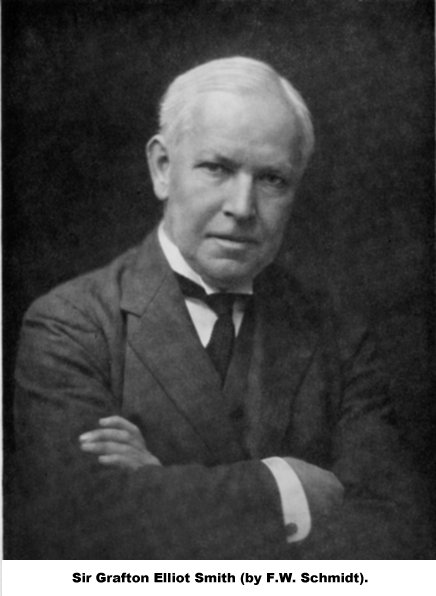
Born in Grafton, New South Wales, Australia, Sir Grafton Elliot Smith (1871-1937) was an anatomist, archaeologist and Egyptologist. As a student in Australia he dissected marsupials and monotremes and studied their brains. Smith continued his studies at Cambridge and then Cairo. He analysed the ancient mummification process from a scientific point of view and was the first person to x-ray an Egyptian mummy. Smith was interested in the anatomy of the human brain and catalogued those in the British Museum’s collection.
Sir Edward Mellanby (1884-1955) was a physician and pharmacologist. Mellanby discovered two fat-soluble substances played an important role in bone health. One of them, Vitamin A, had already been identified by Frederick Gowland Hopkins. Mellanby identified the other as Vitamin D. He found that rickets, softening and distortion of the bones primarily in children, was caused by lack of Vitamin D which was in turn caused by lack of sunlight. Melanby also researched and wrote about alcohol’s absorption into the blood stream, the metabolism of lactating women and vomiting and diarrhoea in children.
Botanist Sir Frederick William Keeble (1870-1952) published his first scientific papers in 1896. After spending some time in Ceylon he wrote about of the distinctive hanging foliage of some native trees. During the First World War, Keeble was Controller of Horticulture in the Food Production Department of the Board of Agriculture. He encouraged citizens to grow potatoes, promoted the ‘patriotic gardeners’ scheme, and lectured at the RI in 1919 about intensive cultivation. In the 1920s, he researched the effects of fertilisation on arable and pasture land at Jealott’s Hill Agricultural Station.
Jack Cecil Drummond (1891-1952) was a biochemist, primarily interested in nutrition. Drummond suggested the term vitamin which was widely accepted as a replacement for the former cumbersome term ‘accessory food factor’. He contributed to the war effort with his work regarding nutrition and food rationing. Drummond, his wife Anne and daughter Elizabeth were brutally murdered while on holiday in France. The trial and conviction of a local farmer has been controversial.
Sir James Gray (1891-1975) focused on cytology, the study of plant and animal cells, during the first part of his career. He published two books, Ciliary Movement (1928) and Experimental Cytology (1931) on the subject. In latter years, Gray’s work centred on animal locomotion. He was intrigued by the connection between the size of an animal and its means of propulsion. Gray applied engineering principals to his analysis of the terrestrial, aquatic and aerial movement of animals.
The early work of botanist Sir Edward James Salisbury (1886-1978) centred on the oak-hornbeam woods and scrub communities near his home in Hertfordshire. He was appointed to the Directorship of the Royal Botanic Gardens, Kew in 1943. When the Second World War ended, Salisbury was tasked with putting Kew to rights. New staff had to be hired and trained; structures, like the enormous Palm House designed by Decimus Burton had to be rebuilt. As Director, Salisbury continued to lecture and write articles on biology.
Zoologist Harold Munro Fox (1889-1967) changed his name by deed poll to this English translation of his father’s Prussian surname, Fuchs. After graduating from Cambridge in 1911, where he had read for the Natural Sciences Tripos, Fox went to the Plymouth Laboratory of the Marine Biological Association of the United Kingdom. There with Cresswell Shearer and Walter de Morgan, Fox studied the genetics of sea urchin hybrids. During the first World War he served in Egypt, among other places, where he met his first wife. On subsequent trips to Egypt he studied the marine invertebrates of the Suez Canal.
As a neurologist, John Zachary Young (1907-1997) concentrated his research on the central nervous system and the functions of the brain. His contributions to marine biology include the discovery of the squid giant axon, for which he is arguably best known. Young became interested in cephalopods in 1932 when working in Naples, Italy with Enrico Sereni. When examining the mantle of the Longfin inshore squid, Young discovered the presence of giant-sized axons(nerve fibres). The scale of these axons facilitated the neurological research done by Andrew Fielding Huxley and Alan Hodgkin, for which they won the Nobel Prize.
Sir Richard John Harrison (1920-1999) was a zoologist who focused his early work on the comparative reproduction of mammals particularly horses, goats, deer, primates, seals and whales. Harrison's was the first to demonstrate that a species, the badger in this case, could retain a fertilised egg within the uterus for several months before implantation. The advantage of this delay is that offspring are born during the season when food is in plentiful supply.
Andrew Fielding Huxley (1917-2012) was awarded the Nobel Prize in Physiology or Medicine in 1963, with Alan Lloyd Hodgkin and Sir John Carew Eccles ‘for their discoveries concerning the ionic mechanisms involved in excitation and inhibition in the peripheral and central portions of the nerve cell membrane’
Max Ferdinand Perutz (1914-2002) was born in Vienna, Austria. He worked in the fields of molecular biology and crystallography. He is best known for his work on hemoglobin and its uptake of oxygen and its release to the muscles and other organs. The Nobel Prize in Chemistry 1962 was awarded jointly to Max Ferdinand Perutz and John Cowdery Kendrew ‘for their studies of the structures of globular proteins’.
Lord David Chilton Phillips (1924-1999) was a molecular biophysicist and structural biologist. Phillips studied X-ray crystallography at University College Cardiff. In 1955 he joined the staff at the RI and in the Davy Faraday Laboratory, was the first person to determine the atomic structure of lysozyme. Lysozyme, is an enzyme found in egg whites and body secretions such as tears and nasal mucous. Using X-Ray crystallography, Chilton was able to explain the mechanism used by lysozyme to destroy certain types of bacteria.
Sir John Bertrand Gurdon (1933- )is a developmental biologist, best known for his work in cloning and nuclear transplantation. In 1962, Gurdon successfully cloned a frog when he removed the nucleus of a fertilised egg cell from a frog and replaced it with the nucleus of a cell taken from a tadpole’s intestine. With Shinya Yamanaka, he was awarded the Nobel Prize for Physiology or Medicine ‘for the discovery that mature cells can be reprogrammed to become pluripoten. Gurdon is the eighth Fullerian Professor to win a Nobel Prize, and the fourth to do so in medicine.
Dame Anne Laura McLaren (1927-2007) was a pioneer in mammalian developmental biology and genetics. In 1952, McLaren helped to develop the techniques for embryo culture and transfer that enabled the development of human in vitro fertilisation. She actively took part in the ethical debates surrounding reproductive technology. She was made a Dame of the British Empire in 1993. McLaren died in a car accident on 7 July 2017, while driving from Cambridge to London, with her former husband Donald Michie, who was also killed.
Baroness Susan Adele Greenfield (1950- )is a neuroscientist who’s early research concentrated on acetylcholinesterase (AChE), a molecule of the nervous system, and its possible connection to Parkinson’s and Alzheimer’s diseases She was awarded the CBE in the Millennium New Year's Honour's List and Life Peerage (non-political) in 2001. Her assertions that social media and video games have negative impacts on brain development have been controversial.